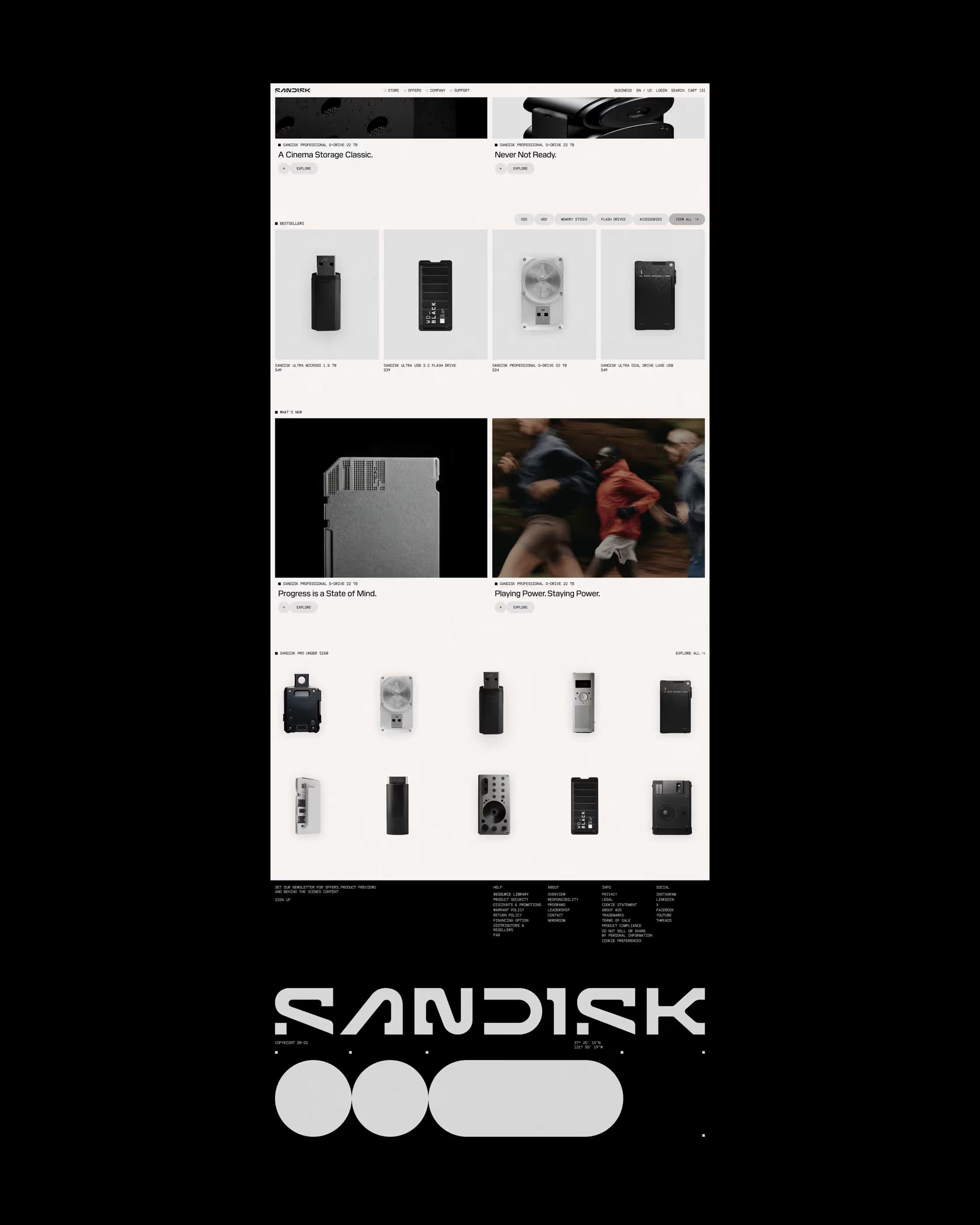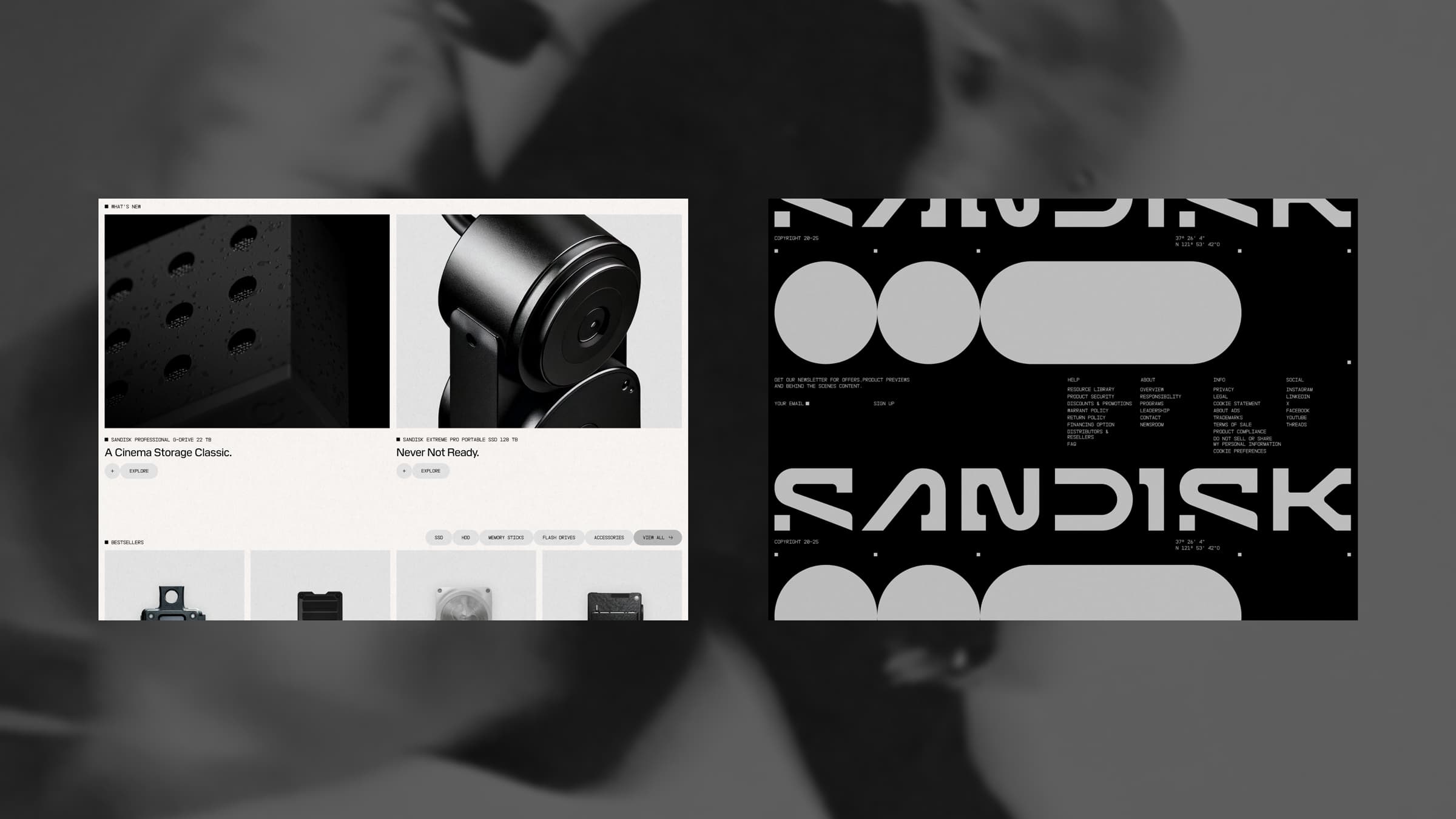
Aino builds Sandisk's digital design system around the pixel
When a legacy tech brand separates from its parent company after nearly a decade, the new visual identity is only half the problem. The other half is making it work across every screen. As Sandisk was spun out from Western Digital, the storage company return to being a standalone brand.
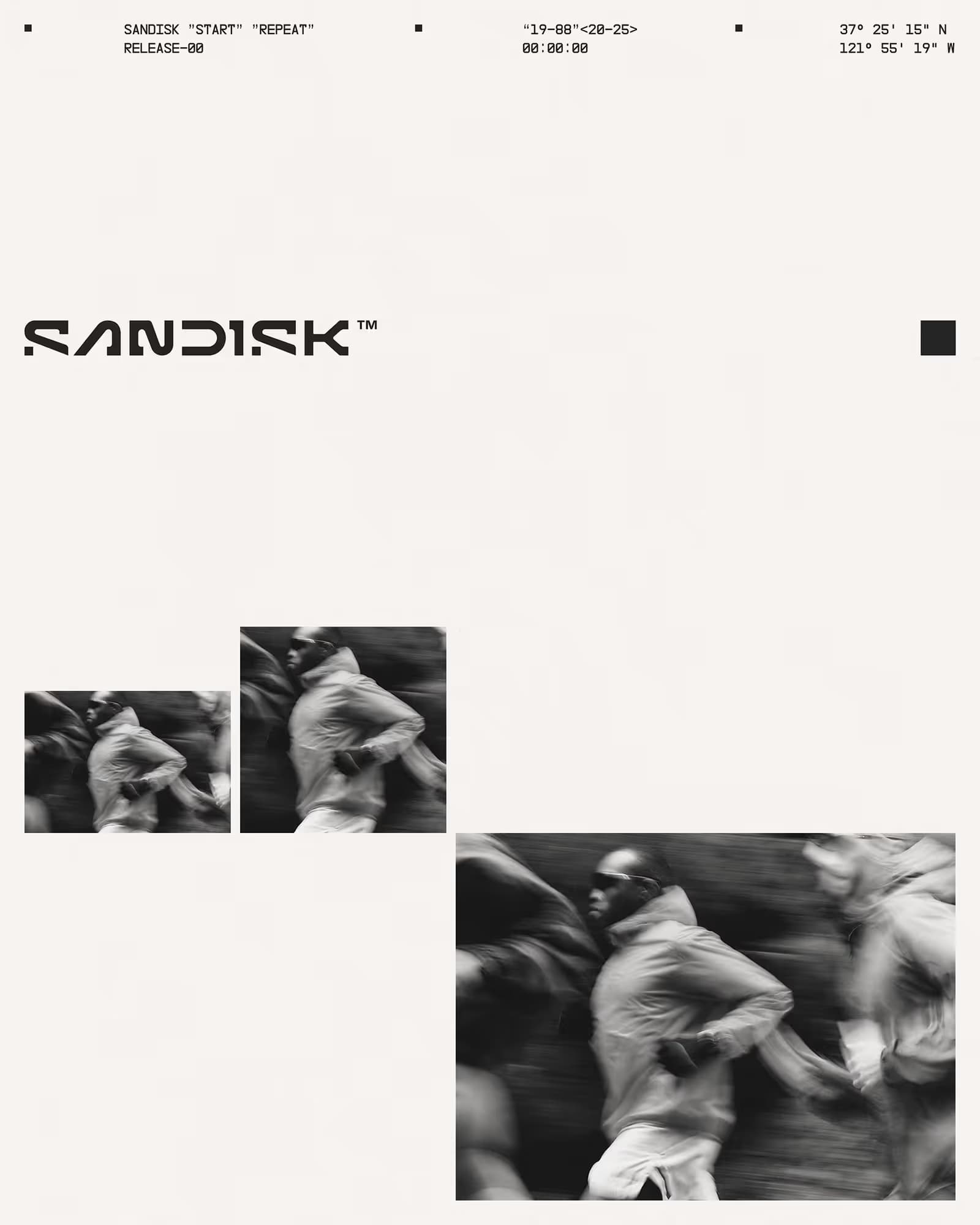
Sandisk and California-based studio ELA had established the brand's new visual direction. Aino's task was to take those elements and build a digital system that could carry them across the full site experience without reducing them to decoration. Rather than apply the identity as a surface layer, the team worked to identify the structural logic behind it and extend that into behaviour, interaction and component architecture. That logic centred on the pixel as an organising principle — not just a graphic element but a system-wide marker that dictates hierarchy and guides users through the interface.
“For us, a design system has as much substance as any other medium. It's about identifying the underlying logic behind the visuals and extending it into behaviour, structure and interaction. Every component we designed had to answer why it exists, not just how it looks.”
Johan Thorstensson, Design Director at Aino
The pixel as interface logic, not ornament
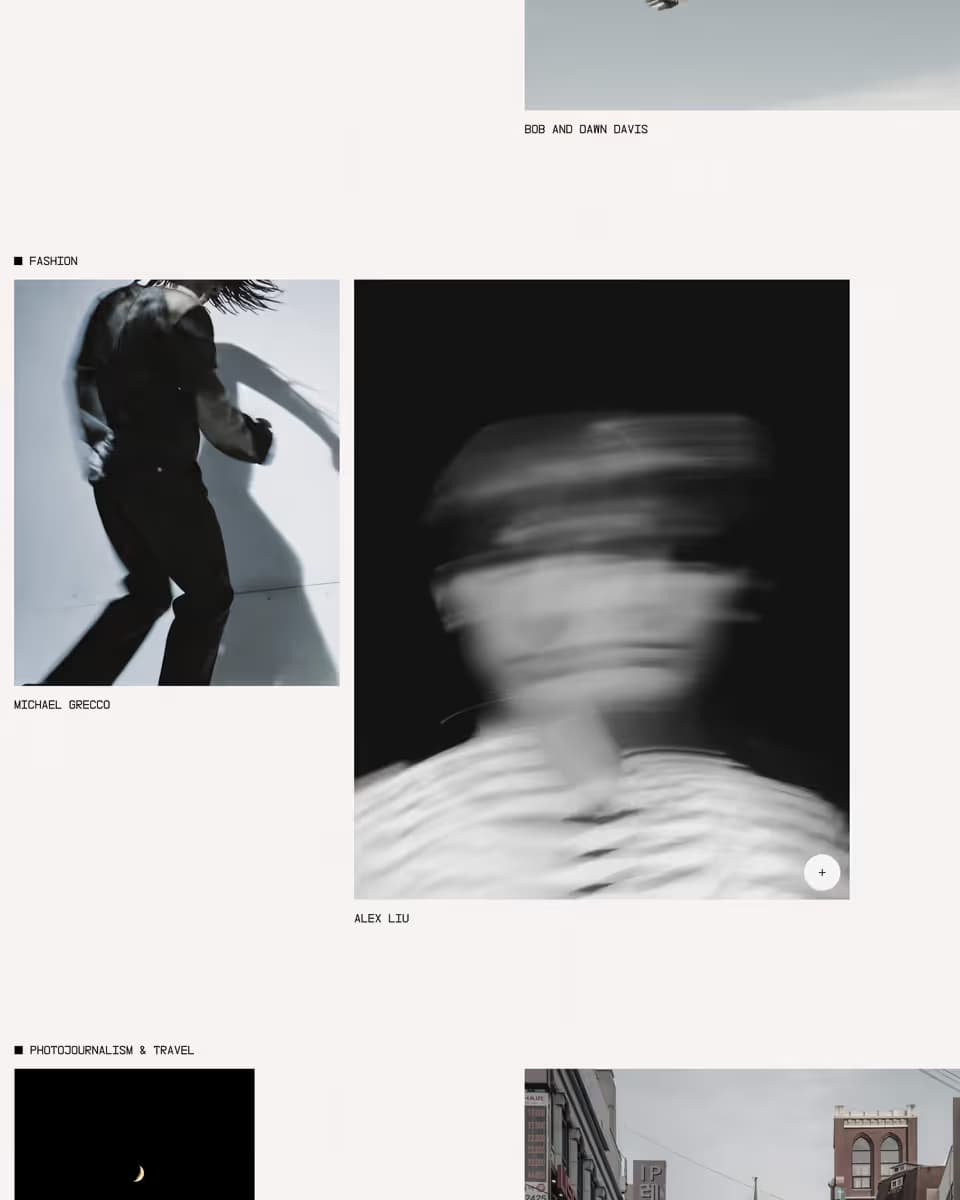
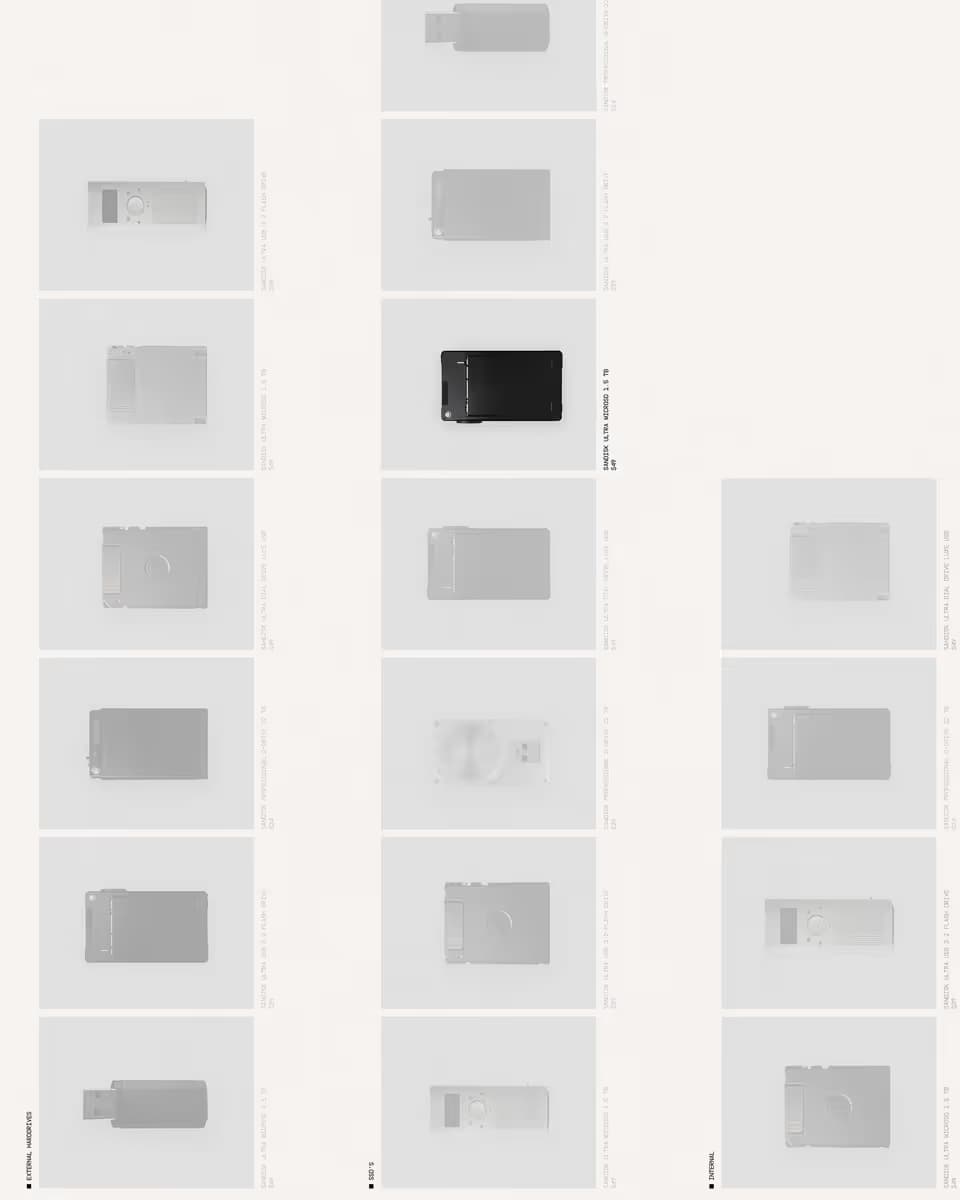
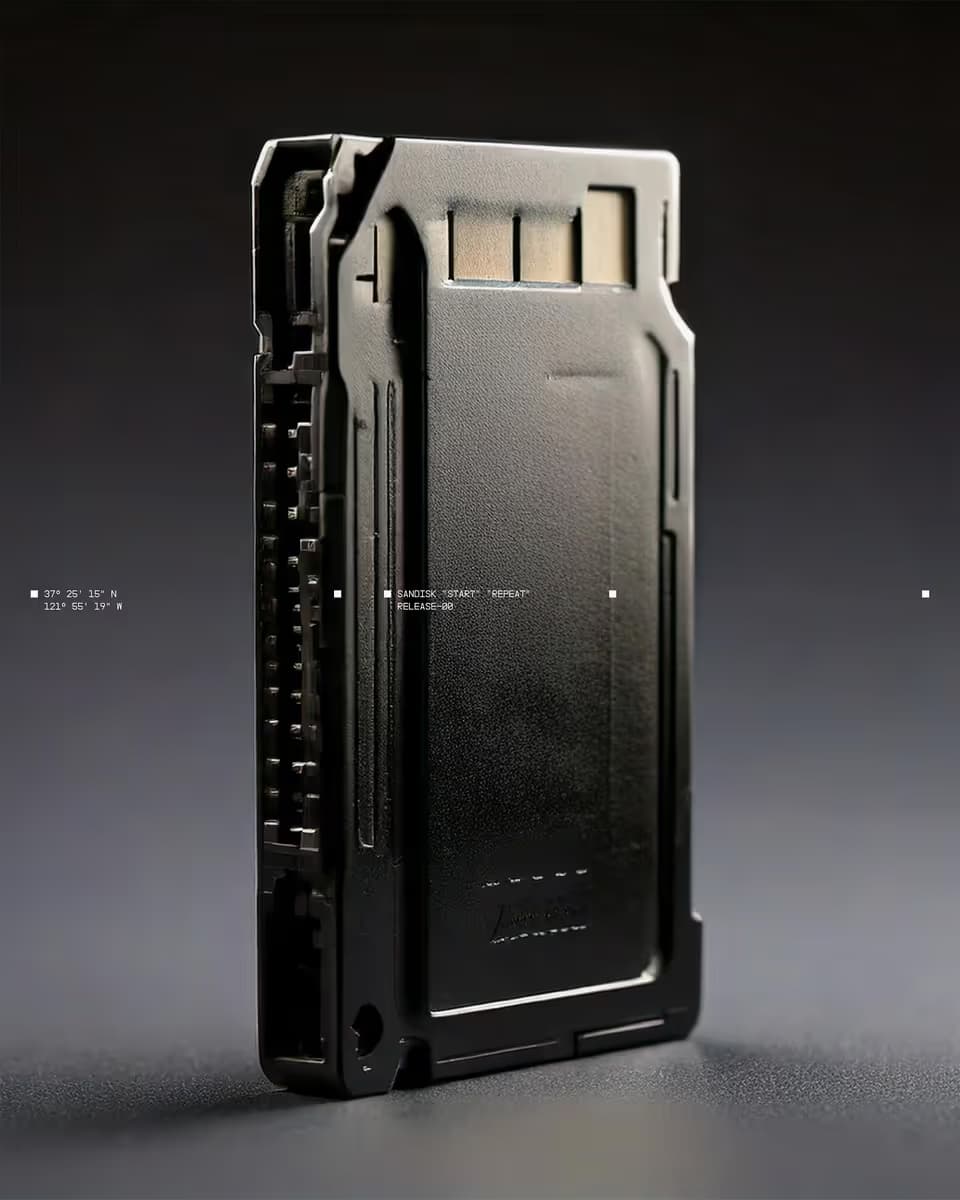
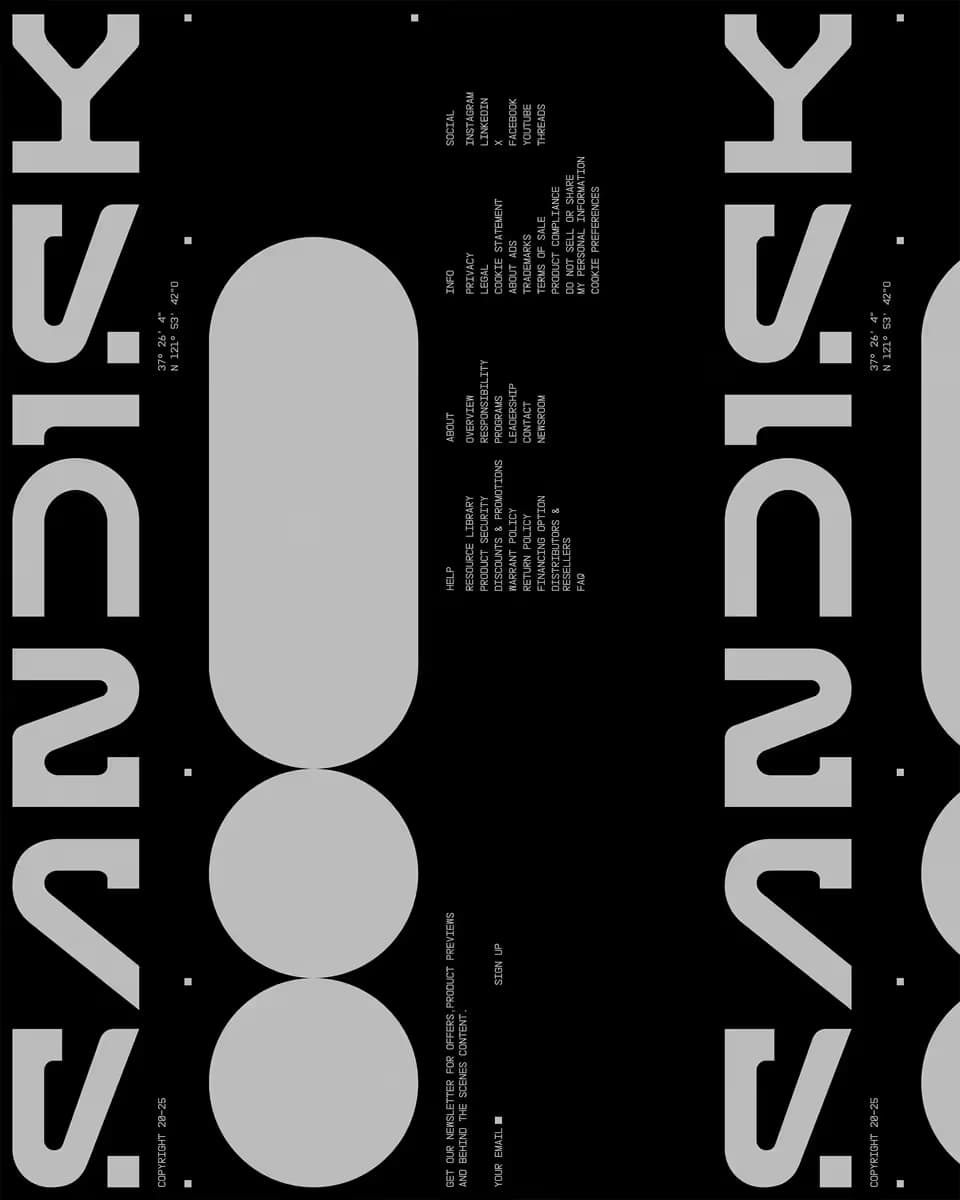
The core design challenge was translating a brand concept, the pixel as the smallest unit of data, into consistent interface behaviour. Across the site, the pixel functions as a hover state, a marker for new modules, a subheading companion, a bullet list element, corner anchors on editorial images, and a driver of image reveal animations.
However, Aino also added something that wasn't present in the original identity guidelines. "A major reason the project turned out so well was the significant creative freedom and trust we were given. As long as we stayed true to the overall creative direction and the updated visual identity, the UI and design system were up to us," says Thorstensson.
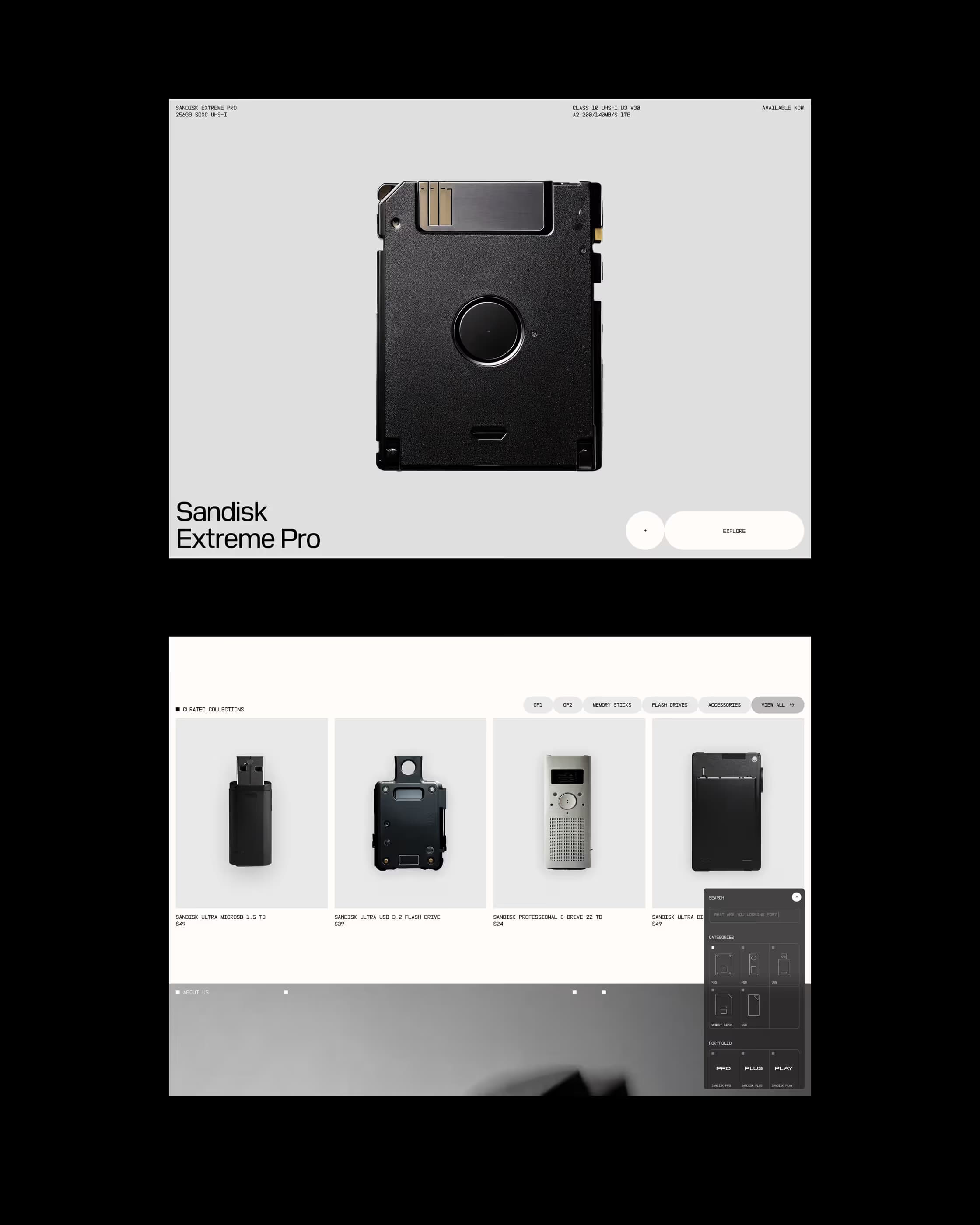
The first thing is a concierge module, a single dynamic component that adapts between search, filtering and information display depending on user context. The second is a system of blurry overlays used to create hierarchy and separate interface layers. Aino chose the blur treatment deliberately to align the brand with the visual language of major operating systems, positioning SanDisk in a more system-like tech segment. Motion design, developed with London-based Daisy Chain Studio, reinforces the pixel logic through reveal animations tied to the grid.